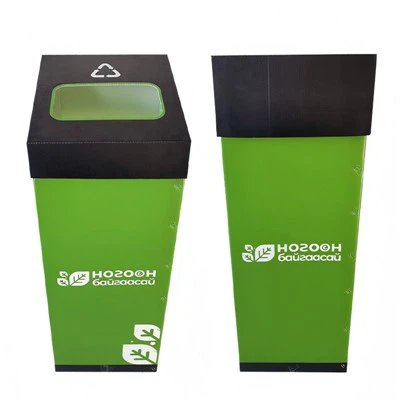
In recent years, the concept of carbon footprint has gained significant attention as the world grapples with the challenges of climate change. As a supplier of PP Recyclable Boxes, I often find myself in discussions about the environmental impact of our products, particularly their carbon footprint. In this blog, I will delve into the intricacies of calculating the carbon footprint of producing a PP recyclable box and explore ways to minimize it.
Understanding the Carbon Footprint
The carbon footprint is a measure of the total amount of greenhouse gases, primarily carbon dioxide (CO2), emitted directly or indirectly in the life cycle of a product or service. It includes emissions from raw material extraction, production, transportation, use, and disposal. For a PP recyclable box, the carbon footprint encompasses all the stages from the extraction of raw materials to the end - of - life scenario.
Raw Material Extraction
Polypropylene (PP) is a thermoplastic polymer derived from petroleum or natural gas. The extraction and refining of these fossil fuels are energy - intensive processes that generate a significant amount of greenhouse gas emissions. According to the International Energy Agency (IEA), the oil and gas industry is responsible for a large portion of global CO2 emissions.
When it comes to producing PP, the feedstock is first cracked to produce propylene, which is then polymerized to form polypropylene. The energy required for these chemical processes is typically sourced from fossil fuels, leading to direct CO2 emissions. Additionally, the extraction of raw materials often involves activities such as drilling, mining, and transportation, which also contribute to the carbon footprint.
Production Process
Once the polypropylene resin is obtained, it is used to manufacture the recyclable boxes. The production process of PP recyclable boxes involves several steps, including extrusion, thermoforming, and cutting.
Extrusion is the process of melting the polypropylene resin and forcing it through a die to create a continuous profile. This process requires a substantial amount of heat energy, usually provided by natural gas or electricity. If the electricity is generated from coal - fired power plants, the carbon emissions associated with the production will be relatively high.
Thermoforming is another energy - consuming step, where the extruded sheet is heated and formed into the desired shape of the box. Cutting and trimming operations also require energy, although to a lesser extent compared to extrusion and thermoforming.


Transportation
Transportation plays a crucial role in the carbon footprint of a PP recyclable box. The raw materials need to be transported from the extraction sites to the manufacturing facilities, and the finished products need to be shipped to the customers. The type of transportation used, such as trucks, trains, or ships, and the distance traveled significantly impact the carbon emissions.
Trucks are a common mode of transportation for short - distance deliveries. However, they are relatively less fuel - efficient compared to trains and ships. Long - distance transportation by sea is generally more carbon - efficient, but it also has its own environmental challenges, such as emissions from ship engines.
Use and End - of - Life
During the use phase, PP recyclable boxes are designed to be reusable and durable, which can help reduce the overall carbon footprint compared to single - use packaging materials. However, if the boxes are not properly managed at the end of their life, they can contribute to landfill waste and associated methane emissions.
Recycling is an effective way to reduce the carbon footprint of PP recyclable boxes. When the boxes are recycled, the energy required to produce new boxes from recycled materials is significantly less than that from virgin materials. According to a study by the European Plastics Converters, recycling polypropylene can save up to 80% of the energy compared to producing it from scratch.
Calculating the Carbon Footprint
Calculating the carbon footprint of a PP recyclable box is a complex task that requires detailed data on each stage of the life cycle. The following steps can be used as a general framework:
- Data Collection: Gather data on the energy consumption, raw material usage, and transportation distances at each stage of the life cycle. This may involve working closely with suppliers, manufacturers, and logistics partners.
- Emission Factors: Determine the emission factors for each activity. Emission factors are the amount of greenhouse gas emissions per unit of activity, such as kg CO2 per kWh of electricity or kg CO2 per liter of fuel. These factors can be obtained from government agencies, industry associations, or scientific literature.
- Calculation: Multiply the activity data by the corresponding emission factors and sum up the emissions from all stages to obtain the total carbon footprint of the PP recyclable box.
Minimizing the Carbon Footprint
As a supplier of PP Recyclable Box, we are committed to minimizing the carbon footprint of our products. Here are some strategies we are implementing:
- Sourcing Sustainable Raw Materials: We are exploring the use of bio - based polypropylene, which is derived from renewable resources such as sugarcane or corn. Bio - based PP has the potential to significantly reduce the carbon footprint compared to traditional fossil - based PP.
- Energy Efficiency Improvements: We are investing in energy - efficient manufacturing equipment and processes. For example, we are using advanced extrusion machines that consume less energy and have better temperature control.
- Optimizing Transportation: We are working with our logistics partners to optimize the transportation routes and modes. This includes consolidating shipments, using more fuel - efficient vehicles, and exploring alternative transportation options such as rail and sea.
- Promoting Recycling: We are actively promoting the recycling of our PP recyclable boxes. We provide clear instructions to our customers on how to recycle the boxes and are collaborating with recycling facilities to ensure proper collection and processing.
Conclusion
The carbon footprint of producing a PP recyclable box is influenced by multiple factors, including raw material extraction, production processes, transportation, use, and end - of - life management. While the production of PP recyclable boxes does generate greenhouse gas emissions, there are significant opportunities to reduce the carbon footprint through sustainable sourcing, energy efficiency improvements, and proper recycling.
As a supplier, we are dedicated to providing high - quality PP Packaging Box and PP Corrugated Box while minimizing the environmental impact. We believe that by working together with our customers, suppliers, and the entire industry, we can make a positive contribution to the fight against climate change.
If you are interested in learning more about our PP recyclable boxes or have any questions regarding their carbon footprint, please feel free to contact us for a procurement discussion. We look forward to working with you to achieve a more sustainable future.
References
- International Energy Agency (IEA). (Year). Global Energy and CO2 Status Report.
- European Plastics Converters. (Year). Energy Savings through Plastic Recycling.